
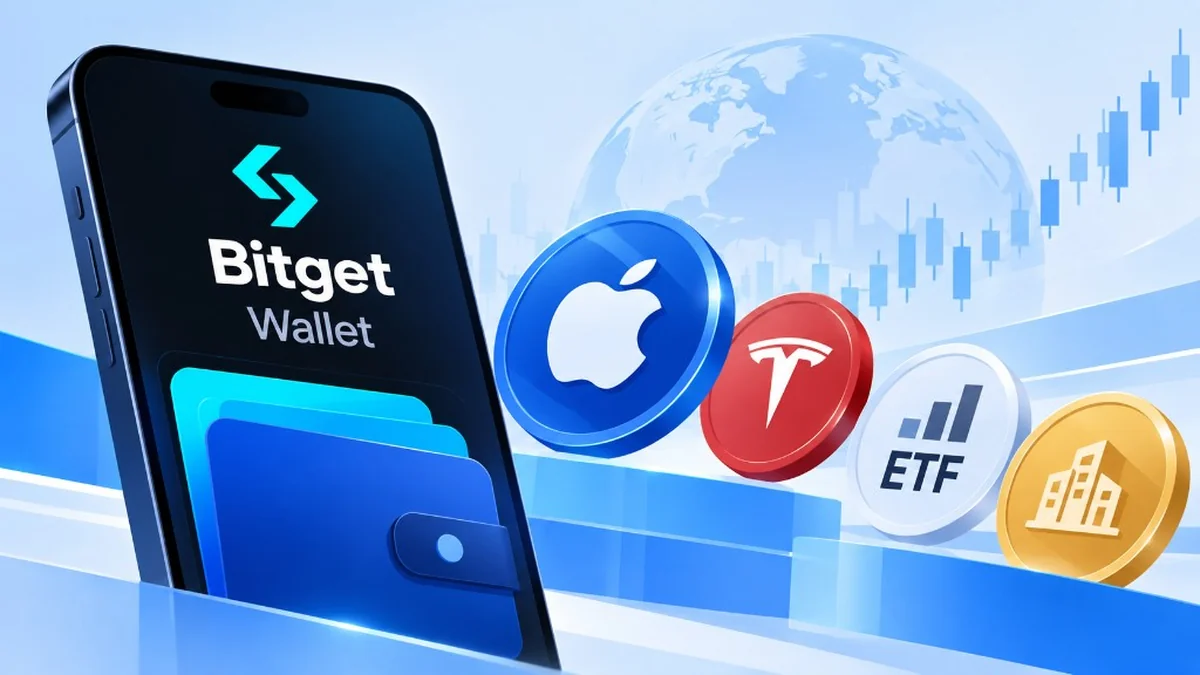
Bitget Wallet Adds Reality for 1,700 Stock Tokens and ETFs: What Self-Custody RWA Access Means
Bitget Wallet has integrated Reality to offer access to more than 1,700 tokenized U.S. stocks and ETFs. Here is what self-custody RWA access means for traders.
Bitget Wallet has integrated Reality to offer access to more than 1,700 tokenized U.S. stocks and ETFs. Here is what self-custody RWA access means for traders.
Quick Answer
Bitget Wallet has integrated Reality, a tokenized asset issuance protocol, to give users access to more than 1,700 tokenized U.S. stocks and ETFs from a self-custodial wallet environment.
The move matters because stock tokens and tokenized equities are moving beyond exchange dashboards and into wallet-based RWA access. Traders should still check what the tokens represent, who issues them, how custody works, whether dividends or corporate actions are handled, and how liquidity is provided.
Key Takeaways
- Bitget Wallet’s Reality integration expands self-custodial access to tokenized U.S. stocks and ETFs.
- The reported asset universe includes more than 1,700 tokenized stocks and ETFs.
- Wallet-based access does not remove product-structure risk.
- Traders should check issuer terms, custody, liquidity, corporate actions and regional eligibility.
- The news supports the broader shift toward RWA trading inside crypto-native interfaces.
Key Table
| Item | Detail | Trader Check |
|---|---|---|
| Event | Bitget Wallet integrated Reality | Confirm product availability by region |
| Asset type | Tokenized U.S. stocks and ETFs | Check whether exposure is backed, synthetic or contractual |
| Access model | Self-custodial wallet environment | Understand wallet, chain and transaction risk |
| Product label | Reality rTokens | Review issuer terms and corporate-action handling |
| RWA relevance | Stock tokens inside wallet-based access | Compare with exchange and broker-style access |
Why This News Matters
Tokenized stocks have usually been discussed as exchange-listed products, broker-linked products or issuer-specific RWA experiments. Bitget Wallet’s Reality integration pushes the theme into a different setting: wallet-native access.
That distinction matters. A self-custodial wallet can make access feel more direct and portable, but the product still depends on issuer terms, token structure, price sourcing, liquidity and eligibility rules.
For BGBriefing readers already comparing Bitget Stock+, rTokens, stock perpetuals and tokenized securities, this news is another sign that RWA access is becoming part of everyday crypto interfaces rather than a separate investment channel.
Stock Tokens Are Not the Same as Ordinary Shares
The central risk remains unchanged: a stock token is not automatically the same as a brokerage share.
A tokenized Apple, NVIDIA or Tesla-linked product may provide economic exposure to a stock price, but traders still need to check whether the product includes share backing, redemption rights, dividend treatment, voting rights or corporate-action adjustments.
BGBriefing’s tokenized stocks guide explains this distinction in more detail. The short version is simple: the ticker is only the starting point. The product structure decides the risk.
Self-Custody Adds a Different Risk Layer
Self-custody can reduce reliance on a centralized account interface, but it also shifts operational responsibility to the user.
Traders should consider:
- which chain the token uses;
- whether the wallet supports the asset safely;
- how approvals and transaction signing work;
- whether liquidity exists beyond the wallet interface;
- what happens if a chain is congested or bridged liquidity dries up;
- whether the product is available in the user’s jurisdiction.
Wallet-native RWA access can be convenient, but it is not a shortcut around due diligence.
How to Evaluate the Reality Integration
The useful checklist is the same one traders should apply to any RWA platform:
| Question | Why It Matters |
|---|---|
| Who issues the rToken? | Defines the legal and product claim |
| What backs the exposure? | Separates backed assets from synthetic tracking |
| How are dividends handled? | Determines whether income is reflected |
| How are stock splits handled? | Shows corporate-action process quality |
| Where does liquidity come from? | Affects spreads and exit risk |
| Who can access the product? | Controls region and KYC limitations |
| Can users redeem? | Determines whether exits depend only on trading liquidity |
BGBriefing’s RWA platform checklist and RWA tokenization companies guide can help separate issuer, custodian, venue and wallet roles.
What Traders Should Watch Next
The next test is not the asset count. It is usage quality.
Traders should watch whether liquidity is deep enough, whether spreads remain stable, whether corporate actions are handled clearly, and whether the wallet experience makes risk easier or harder to understand.
If wallet-native stock tokens become common, the market may start comparing RWA venues the same way traders compare crypto exchanges: product range, cost, execution, custody model and risk controls.
Traders comparing live RWA access can include MSX RWA markets in the same review process, especially when looking at product type, market access and liquidity.
Risk Disclaimer
This article is for informational and educational purposes only. It is not financial, legal, tax or investment advice. Stock tokens, tokenized equities, RWA products, crypto assets and derivatives can lose value. Product structures, rights, liquidity, custody and eligibility may change over time.
Frequently asked questions
What did Bitget Wallet announce?
Bitget Wallet integrated Reality to provide access to more than 1,700 tokenized U.S. stocks and ETFs through a self-custodial wallet environment.
What are stock tokens?
Stock tokens are digital products tied to public stocks or ETFs. They may represent backed exposure, synthetic exposure or contractual rights, depending on the issuer and product terms.
Does self-custody make stock tokens safer?
Not automatically. Self-custody can change account-control risk, but traders still face issuer, custody, liquidity, pricing, eligibility and product-structure risk.
Are Reality rTokens the same as owning U.S. shares?
Not necessarily. Traders must check backing, redemption, dividends, corporate actions, rights and regional eligibility before treating any rToken as equivalent to a brokerage share.
Why does this matter for RWA markets?
It shows that tokenized equities are moving into wallet-native distribution, not just exchange or broker interfaces. That could expand access, but it also increases the need for clear product disclosure.

Report the page and describe what should be reviewed.