
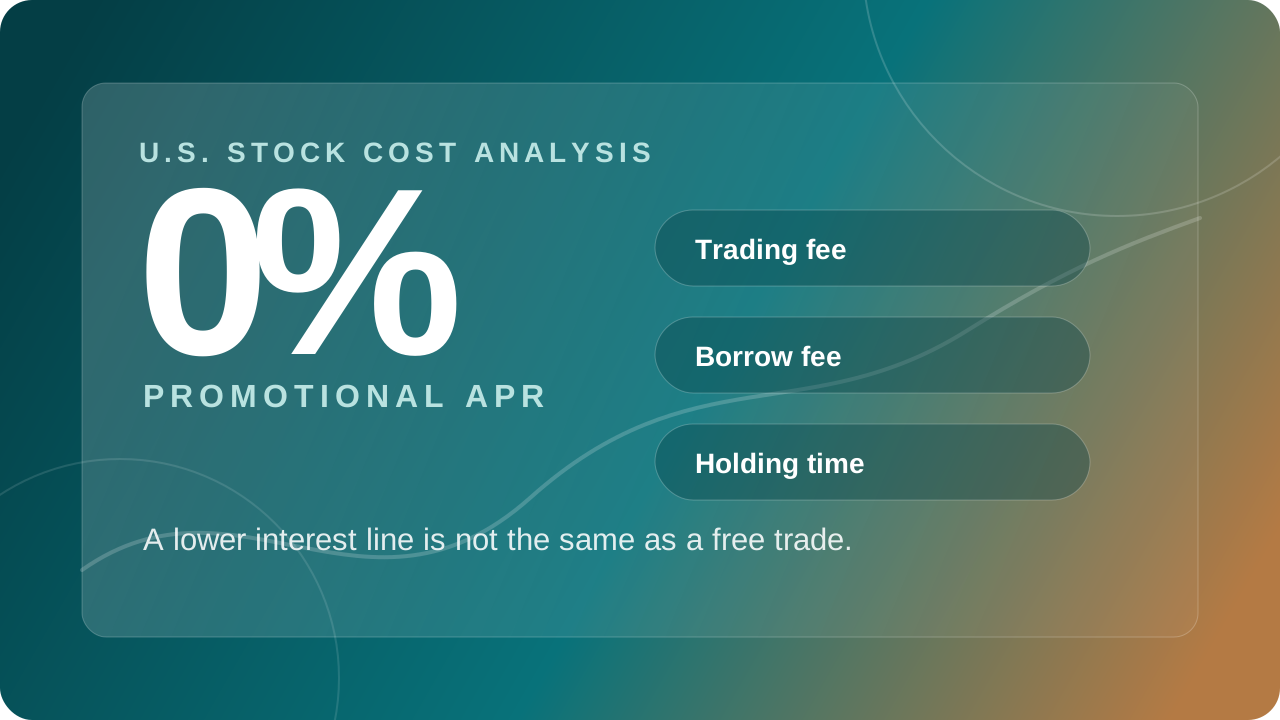
Beyond “0% short-selling APR”: the real cost of U.S. stock margin and short selling
A low promotional rate can reduce one cost line, but trading fees, borrow fees and holding time still determine the cost of a U.S. stock margin or short position.
A short-selling APR as low as 0% can reduce an eligible interest charge during a promotion, but it does not make the trade free. Estimate execution fees, stock-borrow costs, holding time and other applicable charges alongside the promotional rate.
TL;DR
- A low promotional APR usually applies to one interest line under specific conditions.
- Trading fees, stock-borrow fees, spread, FX and holding time can still affect total cost.
- Check eligibility, covered securities, campaign dates and calculation rules before relying on a promotion.
- Margin and short selling carry substantial risk and may not suit every user.
A “0% APR” promotion is a useful signal, not a complete cost estimate
A recent Bitget post on X announced Stock+ margin financing and short-selling services for U.S. stocks. Its promotional message says that eligible short-selling users may receive an annualized interest rate as low as 0% during the campaign period.
The headline is worth noticing, but it is not the same as a free trade. Margin and short-selling positions can also involve execution fees, stock-borrow fees, foreign-exchange costs and other applicable charges. For positions held overnight or longer, those items can materially change the economics of a trade.
Margin buying and short selling create different cost paths
Margin buying uses available financing in addition to a trader’s own capital to purchase a security. The financing balance may accrue interest while it remains outstanding.
Short selling generally involves borrowing a security, selling it, then buying it back later to return the borrowed shares. Besides price risk, the availability and cost of borrowing the shares can affect both the viability and cost of the position.
The cost lines to include in a full estimate
Start with the trading fee associated with executing the order; it may depend on product, order type, account tier and venue rules. Then calculate the margin or short-selling interest from the balance subject to interest, the applicable annualized rate and the expected holding period.
For short positions, treat the stock-borrow fee as a separate cost unless the product rules explicitly state otherwise. It can change with borrow supply, liquidity and demand for the security. Spread, liquidity impact, FX, transfers and other applicable account charges can also matter when capital moves or an order is difficult to execute.
Converting an annualized rate into a holding-cost estimate
A simplified estimate is: estimated interest ≈ interest-bearing amount × annualized rate × days held ÷ 365. For example, 10,000 × 6% × 7 ÷ 365 is approximately 11.51. This example explains the calculation only; it is not a quoted rate or a statement of actual settlement terms.
If an eligible promotion reduces the annualized interest rate to 0%, that particular interest line may fall to zero for the defined period. It does not automatically remove stock-borrow fees, trading fees or other applicable charges.
What to check before relying on a low-rate promotion
Read the full campaign rules: which account types or user groups qualify, which U.S. stocks and position types are covered, when the offer begins and ends, and when standard pricing resumes. Confirm whether stock-borrow fees, execution fees, FX costs or other charges are billed separately.
You should also confirm how the interest-bearing balance is determined, when interest begins to accrue and how non-trading days are handled. Product availability, eligibility, rates and promotion terms can change; verify the relevant official product and campaign pages before trading.
A cost-aware pre-trade process
Estimate the execution fee using the intended order size and order type. Set an expected holding period rather than assuming the position will close the same day. Then check the applicable interest rate, campaign eligibility, stock-borrow availability and any separately quoted borrow fee.
Reassess the position if the planned holding period, borrow availability or applicable rates change. A disciplined pre-trade check turns a headline promotion into a more complete decision about cost and risk.
Source and risk note
The X post referenced in this analysis was supplied as a screenshot for editorial context. Product availability, eligibility, rates and campaign terms can change; confirm them on the relevant official pages before trading.
This article is for general information only and is not investment, trading, legal or tax advice. Margin and short selling involve substantial risk and may not be appropriate for every user. Read the applicable rules and assess your own risk tolerance before trading.

Report the page and describe what should be reviewed.