
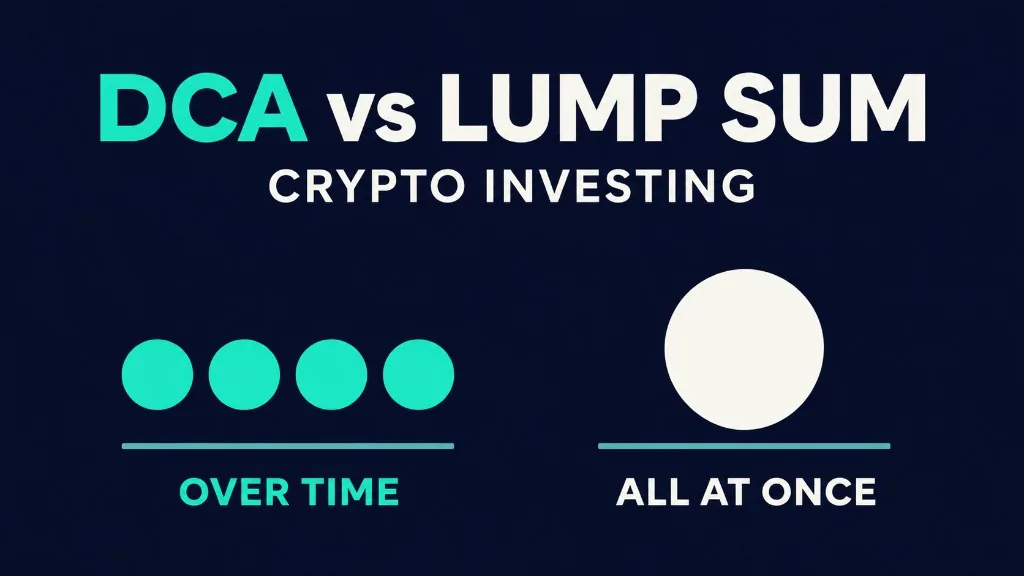
DCA vs Lump Sum: Comparing Two Crypto Entry Plans
Compare dollar-cost averaging and lump-sum crypto purchases across timing risk, execution, fees, discipline, and portfolio planning.
Compare dollar-cost averaging and lump-sum crypto purchases across timing risk, execution, fees, discipline, and portfolio planning.
Quick Answer
Dollar-cost averaging, or DCA, means buying a fixed amount at regular intervals. A lump-sum approach means committing the intended amount at one time. Neither method guarantees a better return. The choice changes how you manage timing risk, transaction costs, emotional pressure, and the chance that the market moves before all capital is deployed.
Key Takeaways
- DCA spreads purchases across time instead of relying on one entry point.
- Lump-sum investing puts all planned capital into the market immediately.
- DCA can reduce the emotional impact of short-term price swings but may increase the number of transactions.
- Lump sum offers immediate exposure but increases dependence on entry timing.
- A written plan matters more than changing strategy after every price move.
Key Table
| Decision factor | DCA | Lump sum |
|---|---|---|
| Entry timing | Spread over multiple dates | Concentrated on one date |
| Market exposure | Builds gradually | Begins immediately |
| Transaction count | Usually higher | Usually lower |
| Main behavioral challenge | Sticking to the schedule | Accepting short-term volatility after entry |
| Main risk | Market rises before all purchases occur | Market falls soon after purchase |
What Dollar-Cost Averaging Does
DCA means committing a fixed amount on a recurring schedule, such as weekly or monthly, regardless of short-term price movement. When prices are lower, the same amount buys more units; when prices are higher, it buys fewer.
The main benefit is process discipline. Instead of attempting to identify a perfect entry point, the buyer follows a defined schedule. This can be useful for someone whose available funds arrive gradually or who wants to reduce the psychological pressure of making one large decision.
However, DCA is not a market-timing tool. It can underperform a lump-sum entry if prices rise steadily after the first purchase, because part of the planned capital remains uninvested.
What Lump Sum Does
A lump-sum approach places the intended capital into the market at once. It provides immediate exposure, which can be beneficial if the asset rises afterwards. It also reduces the number of transactions and may simplify record-keeping.
The trade-off is timing concentration. If the market falls shortly after entry, the full amount is exposed to that drawdown immediately. This can make it harder for some participants to follow their plan, especially in volatile crypto markets.
A lump-sum decision should therefore be connected to a clear allocation limit, holding horizon, and understanding of downside risk—not just a belief that the price will rise.
Fees, Execution and Practical Planning
DCA can create more separate orders, so trading fees, spreads, and minimum order sizes deserve attention. A plan that appears disciplined can become inefficient if each small purchase carries disproportionate costs.
Lump sum reduces the number of trades, but a large order can face price impact when liquidity is limited. Splitting a large order may still be sensible for execution reasons, even if the overall allocation decision is lump sum.
Review how platform fees work before setting a recurring schedule. The right plan should reflect actual fees, order size, and the product you intend to use.
A Better Question Than “Which Is Best?”
Instead of searching for one universally superior method, ask:
- Is my capital available all at once or over time?
- Can I follow the plan through a drawdown?
- How important is immediate market exposure?
- How much will repeated transactions cost?
- What is the maximum allocation I am willing to hold?
- What would cause me to pause or reassess the plan?
For a Bitget user, product choice should come after the risk plan. Start with the simpler structure you understand, then review the product-selection overview.
Risk Disclaimer
Crypto assets are volatile and can lose value rapidly. This article explains general planning concepts only and is not investment, financial, tax, or legal advice.
Frequently asked questions
Is DCA safer than lump sum?
Neither is risk-free. DCA changes timing exposure; it does not remove the risk that an asset loses value.
Does DCA guarantee a better average price?
No. The average purchase price depends on the path of market prices over the buying period.
Should I change my plan after every major price move?
Frequent changes can turn a disciplined plan into emotional market timing. Define reassessment rules before investing.

Report the page and describe what should be reviewed.